
Powered By



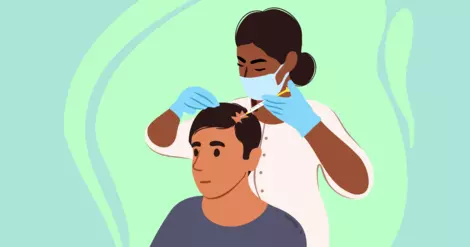
For decades, alopecia areata treatment options were limited and unpredictable. Doctors often relied on steroid injections or topical treatments that helped some people but not others. Now, new medications target the immune system more precisely and are giving many people a better chance at hair regrowth.
Several new drugs have been approved in recent years, and more are still being studied. These treatments don’t cure alopecia areata, but they can help many people regrow hair and feel more confident.
Alopecia areata is a long-term autoimmune disease. This means the immune system mistakenly attacks healthy tissue. In alopecia areata, immune cells target hair follicles, the tiny structures in the skin that grow hair. When follicles are attacked, the normal hair growth cycle stops, and hair falls out, often in smooth, round patches.
The follicles themselves are not destroyed, which means hair can grow back if the immune attack settles down. The course of the disease can be unpredictable. Some people experience one episode and fully regrow their hair, while others have repeated cycles of loss and regrowth.
Research suggests that about half of people with patchy alopecia areata regrow hair within a year, even without treatment.
Still, many people seek treatment because hair loss can take an emotional toll. Studies show alopecia areata is linked with higher rates of anxiety and depression, particularly among teenagers and young adults. Because of this, dermatologists often approach treatment with both medical care and emotional support in mind.
Many of the newest treatments for alopecia areata belong to a group of medications called JAK inhibitors.
To understand them, think of the immune system as a network of messengers. Immune cells send chemical signals that tell the body when to create inflammation. These signals travel through proteins called Janus kinases, or JAK enzymes.
In alopecia areata, these signals mistakenly tell immune cells to attack hair follicles. JAK inhibitors block those signals, helping stop the immune attack so hair can start growing again. Because they block a specific signal in the immune system, they are more precise than older treatments that calm the immune system as a whole.
In the past few years, three JAK inhibitors have been approved in the United States for severe alopecia areata. These approvals mark one of the biggest advances in treatment for this condition:
Baricitinib (Olumiant) became the first systemic drug approved to treat alopecia areata when the FDA authorized it in 2022 for adults with severe disease. A systemic drug works throughout the body, rather than being applied only to one area, like the scalp.
The medication blocks two immune signaling enzymes called JAK1 and JAK2, which play a role in the inflammation that targets hair follicles. Its approval came from two large clinical trials, which included more than 1,200 adults with severe alopecia areata.
After 36 weeks of treatment, about 35 percent to 40 percent of people taking the higher 4-milligram dose experienced major scalp hair regrowth, compared to 3 percent to 5 percent of people taking a placebo (treatment with no active ingredient). Researchers measured improvement using the Severity of Alopecia Tool (SALT) score. A SALT score of 20 or lower means about 80 percent or more of scalp hair coverage.
Hair regrowth usually happens gradually over several months, and continued treatment is often needed to maintain results.
In 2023, the FDA approved ritlecitinib (Litfulo) for severe alopecia areata in people age 12 and older. This approval expanded treatment options to adolescents, a group that often experiences strong emotional effects from hair loss.
Ritlecitinib works slightly differently from baricitinib. It targets JAK3 and TEC kinases, which are involved in activating immune cells. In its major clinical trial, which included adults and adolescents with at least 50 percent scalp hair loss, 23 percent to 32 percent of people experienced major hair regrowth after 24 weeks.
The newest option is deuruxolitinib (Leqselvi), approved by the FDA in 2024 for adults with severe alopecia areata. Like baricitinib, this medication blocks JAK1 and JAK2 and was developed specifically for skin conditions. In its phase 3 clinical trial, researchers studied more than 1,000 adults with extensive hair loss. After 24 weeks, 31 percent of people had significant hair regrowth. Some participants started seeing regrowth within the first few months, and results continued to improve with ongoing treatment in longer follow-up.
Other targeted drugs are also being studied for the treatment of alopecia areata, but their trial status can change quickly. For example, upadacitinib (a JAK1 medicine used for other skin problems) is being studied for severe alopecia areata. Ivarmacitinib has moved beyond early testing, with newer, larger studies reported. Jaktinib has also been studied in people with severe alopecia areata, and later-stage trials have been completed or listed as completed.
Another medicine, deucravacitinib (a TYK2 medicine used for psoriasis), was studied for alopecia areata, but at least one phase 2 study was stopped early.
Because studies start and stop over time, ask your dermatologist (or check a clinical trial listing) for the most current trial updates.
One of the most common questions people ask is whether these drugs cure alopecia areata. Right now, the answer is no.
These medications help control the immune attack, but they do not change the underlying autoimmune condition. Because of this, hair loss may return if treatment stops. Researchers are still studying how long people should remain on therapy and whether some people can eventually taper treatments safely.
Because JAK inhibitors affect the immune system, doctors monitor people carefully during treatment. Common side effects include:
Before starting therapy, doctors typically screen for conditions such as tuberculosis or viral hepatitis. Those on JAK inhibitors also need periodic blood tests to monitor blood counts, liver function, and cholesterol levels.
The FDA requires boxed warnings on systemic JAK inhibitors because of potential risks such as serious infections, blood clots, heart problems, and certain cancers. These events are uncommon in alopecia trials, but long-term safety data are still developing.
Even though these medications represent major progress, it can still be hard to get them.
JAK inhibitors can cost thousands of dollars per month without insurance. Many insurers require prior authorization, meaning doctors must document that the person meets certain criteria before treatment is approved.
Coverage rules vary widely, so dermatology clinics often work with patient assistance programs to help reduce costs.
The success of JAK inhibitors has led to more research on new treatments for alopecia areata. Scientists are interested in studying drugs that may:
If you’re living with alopecia areata, talking with a dermatologist can help you understand your options. Helpful questions include:
Tracking progress with monthly photos of the scalp can also help measure improvement over time. For people who do not respond to available treatments, clinical trials may offer access to new options.
On MyAlopeciaTeam, people share their experiences with alopecia areata, get advice, and find support from others who understand.
Have you discussed new alopecia areata treatment options with your healthcare provider? Let others know in the comments below.
Get updates directly to your inbox.




 Continue with Facebook
Continue with Email
Continue with Facebook
Continue with Email
Continue with Facebook
Continue with Email
Continue with Facebook
Continue with Email
Become a member to get even more





 Join
Join

 Your Privacy Choices

This is a member-feature!
Sign up for free to view article comments.
We'd love to hear from you! Please share your name and email to post and read comments.
You'll also get the latest articles directly to your inbox.