
Powered By



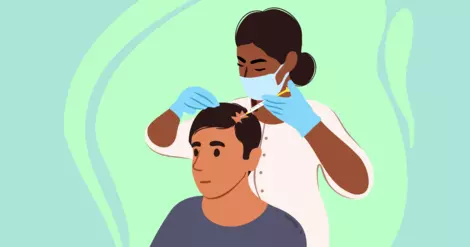
Many people with alopecia areata wonder how long their hair loss will last and what treatment options are available. While there’s no cure for alopecia areata, there are several treatment options available to help regrow hair, including oral treatments (medications you can take by mouth).
For people with moderate to severe hair loss, oral pills may be helpful. Taking an oral treatment, such as a Janus kinase (JAK) inhibitor, can reduce inflammation and minimize how aggressively the immune system attacks your hair follicles. This often results in hair regrowth.
Treatment options for alopecia areata have significantly improved in recent years. The U.S. Food and Drug Administration (FDA) has approved three medications to treat severe alopecia areata since 2022. Many people with alopecia areata, including adolescents, may be eligible for these treatments.
In people with alopecia areata, the immune system mistakes the hair follicles for foreign invaders and attacks them. This results in patchy hair loss with coin-sized areas of bare skin on the scalp. Fortunately, alopecia areata doesn’t permanently damage the follicles, which is why there are effective treatments available to regrow the hair.
JAK inhibitors are one type of oral pill for people with alopecia areata. These medications are immunomodulatory drugs, which means that they can change your immune system’s response. JAK inhibitors work by targeting the part of the immune system that’s overactive in people with alopecia areata.
JAK inhibitors are already used to treat other skin conditions, including eczema and vitiligo. In alopecia areata, JAK inhibitors interrupt the immune pathway that affects the hair follicles. By blocking the inflammatory signals from the immune system, JAK inhibitors allow the hair follicles to recover and begin growing hair again. These medications are usually considered a first-line treatment for people with severe alopecia areata.
If you’re curious whether a JAK inhibitor could be helpful for you, talk to your dermatologist (skin doctor).
FDA-approved JAK inhibitors for alopecia areata include:
Baricitinib and deuruxolitinib are approved for use in people 18 years old and older. Ritlecitinib is approved for adults and adolescents aged 12 and older.
Other oral treatments available for alopecia areata include:
You may benefit from oral treatment if you have moderate to severe alopecia areata. Your dermatologist will work with you to develop an effective treatment plan based on your age, overall health, and how severe your hair loss has been. They will also consider your family history of alopecia areata and other autoimmune conditions.
Oral treatments are usually not recommended for people with a small amount of hair loss, such as one or two bald spots. In these cases, your dermatologist may recommend monitoring your scalp to see if the hair grows back on its own. Many people with mild alopecia areata, particularly children, regrow hair on their own without treatment.
If your hair doesn’t come back on its own, your dermatologist will likely recommend trying a topical treatment applied directly to the scalp, which may include:
Oral treatments are usually recommended when hair loss is widespread, like when it affects the entire head. In these cases, topical treatments alone are unlikely to be effective. JAK inhibitors are effective for people with widespread hair loss. They may cause over 50 percent of the hair to grow back. JAK inhibitors are also helpful for people who have lost their eyebrows or eyelashes.
Your dermatologist may recommend a combination of oral or topical medications. For people with alopecia areata who also have atopic dermatitis (the most common type of eczema), they may suggest dupilumab (Dupixent), an injectable medication that targets certain immune signals.
Treatment results for alopecia areata will be different for everyone. Research shows that taking a JAK inhibitor can significantly improve hair growth. In two studies, people who took baricitinib for 36 weeks achieved hair regrowth over most of their scalp, with less than 20 percent scalp baldness. Hair regrowth began after eight to 12 weeks of treatment.
Once you begin treatment, your dermatologist will likely recommend coming back for a follow-up appointment after three months. If you don’t experience any improvement after six months, your doctor will recommend stopping the medication.
Consider calling your insurance company or hospital billing department before beginning a new oral medication to understand your out-of-pocket cost. JAK inhibitors can be expensive. A 30-day supply of baricitinib can range from $2,770 to $5,530 depending on your dose. Your dermatologist’s office may be able to fill out prior authorization documents to help obtain insurance coverage for your prescription. Ask about financing options at the dermatologist’s front desk.
It can take time for your hair to grow back. During treatment, some people prefer to cover their heads with a scarf or wig, while others opt to shave their heads. Other temporary solutions include hair gel or mousse to hide the bald patches, artificial eyelashes, and eyebrow powder.
Waiting for your hair to grow back can be stressful, and people with alopecia areata are at an increased risk of developing depression and anxiety. Consider meeting with a therapist to receive emotional support. Hair loss can recur (come back) after treatment.
As with any medication, there are certain risks to taking an oral medication for alopecia areata. Fortunately, JAK inhibitor side effects are typically uncommon and mild. Possible side effects include upper respiratory infections, headache, acne, and increased blood lipids. In rare cases, there may be more serious side effects, so always consult with your doctor.
In rare cases, JAK inhibitors can lead to serious complications. Talk with your dermatologist about the possible risks.
When beginning oral treatment for alopecia areata, it’s important to work with a board-certified dermatologist who has experience in managing JAK inhibitors.
On MyAlopeciaTeam, people share their experiences with hair loss, get advice, and find support from others who understand.
Which alopecia treatment options have you tried? Let others know in the comments below.
Get updates directly to your inbox.




 Continue with Facebook
Continue with Email
Continue with Facebook
Continue with Email
Continue with Facebook
Continue with Email
Continue with Facebook
Continue with Email
Become a member to get even more





 Join
Join

 Your Privacy Choices

This is a member-feature!
Sign up for free to view article comments.
We'd love to hear from you! Please share your name and email to post and read comments.
You'll also get the latest articles directly to your inbox.