
Powered By



People are increasingly choosing red light therapy to treat skin concerns and stimulate hair growth after hair loss. In many ways, the treatment stands out among other hair loss treatments. It doesn’t require downtime, has minimal side effects, and is noninvasive. Research indicates that it can be effective for treating androgenetic alopecia. But can it also increase hair thickness and length in people with alopecia areata?
Read on to discover how red light therapy works. You’ll also learn whether it may benefit people with alopecia areata.
Red light therapy is also called low-level laser therapy (LLLT), cold laser therapy, or photobiomodulation. It directs red light or near-infrared light at your skin or scalp. Its goals include reducing wrinkles, helping wounds heal, and supporting hair growth. LLLT is usually not a first-line treatment for hair loss of any kind. But research shows that it may be a helpful alternative treatment for androgenetic alopecia.
Androgenetic alopecia is also referred to as male pattern baldness or female pattern hair loss. It’s different from alopecia areata, which is an autoimmune disorder.
Currently, there isn’t much research on red light therapy for alopecia areata. But thanks to research on red light therapy for other alopecia types, experts know some of the red light therapy benefits that relate to hair growth.
LLLT may reduce inflammation around hair follicles. This sets the stage for increased hair growth. Inflammation contributes to hair loss on the scalp in many types of alopecia.
LLLT can also enhance circulation (blood flow) in the targeted tissues of the scalp. Increased blood flow ensures hair follicles receive important nutrients and growth factors to stay active.
Red light therapy can activate the mitochondria (energy centers) in targeted cells. This can help hair follicles enter the growth phase. Some evidence suggests that LLLT may even prolong follicles’ growth phases and delay dormant phases.
Other light-based therapies have been shown to improve hair growth with alopecia areata, such as single-wavelength excimer lasers, which are supported by better evidence in alopecia areata. But research on red light therapy for alopecia areata remains limited.
Some evidence suggests that red light therapy can treat alopecia areata. It may be especially helpful when used along with immunosuppressive drugs. But there may be some limitations to how much it can help.
Most evidence supporting red light therapy as a hair loss treatment focuses on androgenetic alopecia. Unlike androgenetic alopecia, alopecia areata is an autoimmune disease that damages hair follicles. Increasing blood flow and stimulating hair follicles with red light therapy might help a little. But it doesn’t address the immune system activity causing damage to hair follicles in the first place.
Evidence supporting red light therapy for treating alopecia areata is growing as more research becomes available. Some research suggests that red light therapy may reduce immune system activity to slow hair loss. Reducing inflammation with red light therapy may also be helpful, similar to how corticosteroids treat alopecia areata by reducing inflammation.
One small study showed some improvement in hair growth in people with alopecia areata who had red light therapy. However, this study had a very small sample size. Plus, participants continued other alopecia areata treatments alongside LLLT. Larger studies are needed to understand the true effect of LLLT on alopecia areata without help from other treatments.
LLLT may improve hair growth for people with alopecia areata in ways that aren’t yet understood. More research is needed to understand how alopecia areata works on a cellular level.
You might consider red light therapy for alopecia areata if you’ve already tried first-line alopecia areata treatments. These include corticosteroids, minoxidil, or JAK inhibitors. Most dermatologists recommend red light therapy as a complementary therapy. This means you continue other treatments for hair loss while using it as part of a broader treatment plan. Talk to your dermatologist to find out if red light therapy has a place in your alopecia areata treatment regimen.
If you’re thinking of trying red light therapy to manage hair loss from alopecia areata, it’s important that you know what to expect. Most evidence for red light therapy as a hair loss treatment indicates that repeated treatments are needed to see results, and that results can take time.
Your alopecia doctor can tell you what exactly to expect during treatments. You should also know about possible side effects and different red light therapy device options.
Red light therapy is less harsh on the skin than some topical treatments. But it can cause some scalp irritation for some people. The most common possible side effects of red light therapy are mild and easy to manage. While red light therapy itself is painless, you may feel some temporary discomfort in the treatment area as a side effect. The skin on your scalp may also feel irritated after red light therapy.
The long-term safety of red light therapy isn’t well understood. However, red light therapy isn’t known to cause cancer. Properly using the red light therapy device, or getting red light therapy from a licensed medical professional, can help you avoid complications from misuse like eye damage.
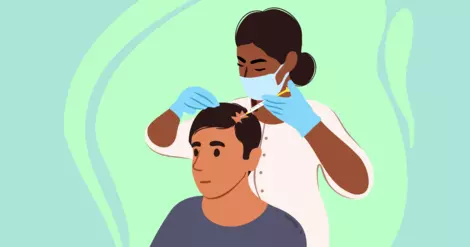
Red light therapy is available as a professional service in many dermatologists’ and other skin care specialists’ offices. Red light therapy devices in medical offices tend to be more powerful than devices for home use.
Many home red light therapy devices are available for purchase. If you decide to go this route, look for a device that is FDA cleared. It should say this on the packaging. You should still consult a board-certified dermatologist before using any home treatment for alopecia areata. Be sure to follow all of the device’s instructions. This includes using eye protection during the treatment.
If you and your dermatologist decide that LLLT is worth trying for alopecia areata, your doctor might encourage you to track your hair growth. They might suggest taking progress photos as you undergo red light therapy for alopecia areata.
Your healthcare provider might advise that you use the Severity of Alopecia Tool (SALT). This can help measure the extent of your hair loss at different points as you receive alopecia areata treatment. SALT describes the percentage of hair lost from your scalp. It can help your dermatologist make decisions about your treatment.
Keep in mind that it can take months and multiple treatments to see any results from hair loss therapies. Your alopecia areata can be unpredictable, and hair might grow back regardless of the treatments you get. Call your doctor or dermatologist if you start losing more hair or if your hair loss spreads to other areas.
On MyAlopeciaTeam, people share their experiences with alopecia, get advice, and find support from others who understand.
Did you see any hair growth after using red light therapy? Let others know in the comments below.
Get updates directly to your inbox.




 Continue with Facebook
Continue with Email
Continue with Facebook
Continue with Email
Continue with Facebook
Continue with Email
Continue with Facebook
Continue with Email
Become a member to get even more





 Join
Join

 Your Privacy Choices

This is a member-feature!
Sign up for free to view article comments.
I was diagnosed with androgenic alopecia and I also have hashimotos hypothyroidism. Currently I doing the LLT for my scalp. I pray this helps.
We'd love to hear from you! Please share your name and email to post and read comments.
You'll also get the latest articles directly to your inbox.