
Powered By



Perhaps you’ve noticed that the part in your hair seems to be getting wider. Or maybe you’ve seen hair thinning across your scalp. While these symptoms could be due to a wide range of factors, they may be caused by androgenic alopecia. This condition is also known as female-pattern hair loss when it affects women.
Discover more about androgenic alopecia and its potential treatment options.
Androgenic alopecia is the most common type of hair loss in females, affecting about 30 million women, according to Cleveland Clinic. It may also be referred to as androgenetic alopecia or female-pattern hair loss. It usually starts as a widening gap in your part. It then causes thinning on the top of your head (called the crown). It doesn’t typically cause a receding hairline or complete baldness.
Androgenic alopecia differs from other types of hair loss, such as:
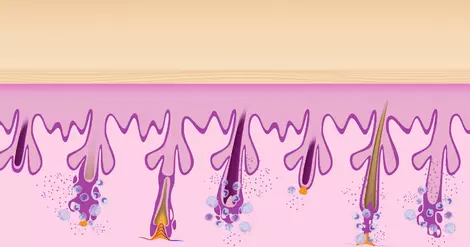
While androgenic alopecia is more common in postmenopausal women, it can affect people of any age. It occurs when hair follicles gradually shrink over time. This causes each hair to get shorter and thinner. Eventually, the hairs no longer grow. This may be due to:
If you notice that your hair is thinning or falling out, talk to a doctor. They’ll perform an examination and testing to determine your diagnosis. This may include blood testing to look for hormonal changes or other causes of hair loss, such as iron deficiency or a thyroid imbalance. The care team may also use a densitometer during the exam. This is a tool that measures the thickness of your hair follicles.
In some cases, the doctor may take a sample of your hair to analyze it further or perform a biopsy. This involves removing a small sample of tissue from your scalp to see if your skin looks healthy.
Androgenic alopecia will usually progress slowly and get worse without treatment. But many different treatments are available to help slow down or stop hair loss. These treatments may also help you get some lost hair back.
Your dermatologist or another healthcare provider will share the treatment that’s most likely to help with your hair loss. Keep in mind that some of these treatments are lifelong and may take several months to work.
The most common androgenic alopecia treatments for women are medications. These may be taken by mouth or applied directly to the skin.
Topical minoxidil solution is one treatment option that may help treat female-pattern hair loss. This medication is applied directly to the scalp and rubbed into the skin twice a day. It comes in a 2 percent solution or a 5 percent solution for those who don’t respond to the lower dosage. It may take four months or more before you see hair regrowth with this medication. Low-dose oral (taken by mouth) minoxidil is also used as a treatment for androgenic alopecia.
If minoxidil isn’t effective, your doctor may recommend taking antiandrogen drugs. These medications are taken orally to help reduce the effect of hormones (androgens) that may be causing hair loss. For instance, spironolactone or finasteride may be prescribed to treat these hormonal imbalances.
Red light therapy may help prompt hair growth in some people. During this treatment, the provider aims a low-wavelength light at your scalp to stimulate growth. Some red light devices are available for use at home as well, though you should check with your doctor before using one.
If hair loss is mild and isn’t yet widespread, you may be a candidate for a hair transplant. During this procedure, a surgeon takes hair from the back of your head and moves it to the areas where you’ve lost hair. It’s not guaranteed to work and may be costly, but some people find success with this treatment.
Your hair may grow back following treatment for androgenic alopecia. Everyone’s experience is different, and you might need to try several hair loss treatments or a combination of therapies before you see regrowth. Speak to your doctor to get a personalized estimate of how much hair might come back and when it may happen.
Losing hair can be stressful and may impact your quality of life. Some people find that changing their hairstyle or wearing a wig helps them feel more confident when managing hair loss. But these options aren’t right for everyone. Experiment with the choices that feel right for you so you can maintain your confidence and self-esteem.
To maintain the health of your existing hair, consider using a gentle shampoo and avoiding chemicals or heat, which can be damaging. Avoid taking any hair growth supplements without first consulting your doctor. Your care team can help you pinpoint which ones may work, and they’ll also ensure that those therapies won’t cause side effects or other issues.
If you find that hair loss is impacting your mental wellness or causing depression or anxiety, let your doctor know right away. They can connect you with a mental health professional who can help you manage those feelings and find solutions.
A dermatologist can identify the best treatments for managing androgenic alopecia. If you have photos showing how your hair looked before versus now, bring those to your appointment. This can help the doctor see the progression of your hair loss so they can better suggest personalized therapies.
If you lose hair suddenly or in clumps, call a doctor right away. Those symptoms could signal something other than androgenic alopecia.
On MyAlopeciaTeam, people share their experiences with alopecia, get advice, and find support from others who understand.
How have you been managing female hair loss or diffuse thinning on your scalp? Let others know in the comments below.
Get updates directly to your inbox.


 Continue with Facebook
Continue with Email
Continue with Facebook
Continue with Email
Continue with Facebook
Continue with Email
Continue with Facebook
Continue with Email
Become a member to get even more





 Join
Join
 Your Privacy Choices

This is a member-feature!
Sign up for free to view article comments.
We'd love to hear from you! Please share your name and email to post and read comments.
You'll also get the latest articles directly to your inbox.