
Powered By



People living with alopecia areata can have hair loss anywhere hair grows on the body, including the face. Eyebrows and eyelashes help protect the eyes, and they can also be an important part of a person’s appearance and identity.
For some people, losing hair in their eyebrows or eyelashes might feel alarming. Read on to learn about treatments that may help and ways to care for yourself while managing eyebrow and eyelash hair loss caused by alopecia areata.
Alopecia areata is an autoimmune disease. In autoimmune diseases, the immune system mistakenly attacks healthy parts of the body instead of protecting them from threats like viruses or bacteria.
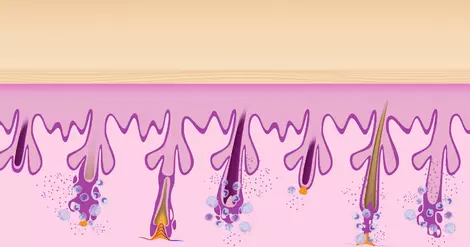
With alopecia areata, the immune system attacks the hair follicles. Although it most often affects the hair on your scalp, it can also affect hair in other areas, including the eyebrows and eyelashes.
When alopecia areata affects the eyebrows or eyelashes, it happens because the immune system mistakenly targets the hair follicles around the eyes. In most cases, the follicles are not permanently damaged, so the hair may grow back.
Studies show that brow and lash hair loss may be linked to more severe scalp hair loss. Some evidence suggests that people with eyebrow loss are more likely to have eyelash loss, and vice versa.
Eyelash or eyebrow hair loss can happen even when you don’t have much scalp loss. In rare cases, it may even be the first or only sign of alopecia areata.
Eyebrow and eyelash loss caused by alopecia areata is called madarosis, and it’s relatively common in people with alopecia areata. About 75 percent of people with severe alopecia areata have patchy hair loss in the eyebrows, eyelashes, or both. Usually, eyebrow and eyelash loss with alopecia happens alongside hair loss on other parts of the body.
Common patterns of eyebrow and eyelash loss with this type of alopecia include:
Loss of eyebrow and eyelash hair can be stressful and upsetting. In one study of women who experienced loss of eyebrows or eyelashes, more than half said they feared what other people thought of them, and 25 percent said they had new anxiety.
If you are struggling with eyebrow or eyelash hair loss, you’re not alone. Many people with alopecia areata report that eyebrow hair loss is just as important to them as scalp hair loss. Studies show that our eyebrows play a big role in how we see and recognize ourselves and others.
If eyebrow or eyelash hair loss is causing stress or anxiety, talk to a healthcare provider. They can provide support or refer you to mental health resources.
Brows and lashes can grow back with alopecia areata. Like other hair lost to alopecia areata, it may grow back white or blond at first and may be thinner than before. Over time, and/or with treatment, your original hair color and texture often return. Often, successful treatment for your scalp hair loss will also help your eyelashes and eyebrows grow back.
Sometimes, your hair will grow back on its own (including hair on your face). With alopecia areata, hair can grow back in some spots and fall out in others. In some cases, symptoms can go away altogether.
Many of the treatments used for scalp hair loss in alopecia areata can also be used for eyebrow and eyelash loss. Because the skin around the eyes is delicate, some alopecia areata treatments need to be used differently or more carefully in these areas.
These treatments haven’t all been studied specifically for the eyebrows and eyelashes, but some people have reported good results. Talk to your doctor to find the right treatment for you.
These anti-inflammatory medicines are commonly prescribed treatments for alopecia areata. They can be taken as pills or applied to your skin using medicated lotion, cream, or foam (for eyebrow loss). Corticosteroids can also be given as injections in each eyebrow every four to six weeks for up to six months. As far as we know, topical or injected steroid treatment has not been shown to work well for eyelash loss.
Minoxidil can be applied directly to the skin and is used to help with hair growth. It usually takes about 12 weeks of treatment before hair will start growing back.
Bimatoprost is a topical drug that can be used to help grow back lashes and brows. For eyelashes, it’s applied to the skin on the base of your upper eyelid. For eyebrows, it’s applied to the eyebrow area.
This is a newer type of medication used to treat the inflammation linked to alopecia areata. Several types of Janus kinase (JAK) inhibitor drugs have shown good results in helping with hair regrowth for alopecia areata, and with eyelashes and eyebrows in particular. Eyebrow and eyelash studies on this type of drug include the following:
If you’re experiencing eyebrow or eyelash loss, there are steps you can take in addition to treatment that can help.
On MyAlopeciaTeam, people share their experiences with alopecia, get advice, and find support from others who understand.
Have you had good results preventing or stopping eyelash and eyebrow loss? Let others know in the comments below.
Get updates directly to your inbox.



 Continue with Facebook
Continue with Email
Continue with Facebook
Continue with Email
Continue with Facebook
Continue with Email
Continue with Facebook
Continue with Email
Become a member to get even more





 Join
Join

 Your Privacy Choices

This is a member-feature!
Sign up for free to view article comments.
I have had alopecia all my life. It started when I was around 3 or 4, my mother told me. I have lost my hair, and it has grown back several times. As an adult, this is the longest it has been. I stop… read more
We'd love to hear from you! Please share your name and email to post and read comments.
You'll also get the latest articles directly to your inbox.