
Powered By



Hair loss along the hairline or around the temples can be frustrating, especially when it seems to appear gradually over time. Hairstyles that pull tightly on the hair can place repeated stress on the scalp, which may eventually lead to thinning or noticeable hair loss called traction alopecia.
The good news is that traction alopecia is often preventable and, in many cases, reversible if caught early. Recognizing the signs and reducing tension on the hair can help protect follicles and support regrowth.
In this article, we’ll explain how traction alopecia develops, how to stop it from getting worse, and which treatments may help encourage hair to grow back.
Traction alopecia is different from other types of alopecia, like alopecia areata or central centrifugal cicatricial alopecia. Whereas other types are often linked to autoimmune conditions or genetics, traction alopecia is caused by repeated tension on the hair and scalp, usually from specific hairstyles. This tension leads to hair loss because hair follicles are pulled repeatedly over time.
The pulling puts stress on the hair follicles, which can eventually lead to hair thinning or hair loss, especially in areas under the most strain, like the hairline or temples. If the pulling persists for a long time, these follicles may become damaged, leading to permanent hair loss.
Most of the time, traction alopecia occurs in people who wear tight hairstyles for an extended period of time. Buns, locs, cornrows, tight braids, weaves, extensions, and even tight ponytails can lead to traction alopecia. Wearing heavy hairpieces or tight headwear can cause it, too. Damage from certain chemical- and heat-based hair treatments, such as relaxers, can weaken your hair. This can make traction alopecia worse or cause your hair to break more easily.
According to StatPearls, traction alopecia is most common in people of African descent, particularly women. Having tightly coiled hair may increase susceptibility to traction alopecia, particularly with styles that place tension on the hair. Certain religious practices may lead to traction alopecia, including wearing hijabs in a way that pulls the hair, wearing turbans with hair tightly tied underneath, or using other head coverings. Ballet dancers who wear tight buns regularly are also at risk, as are people whose jobs require them to wear tight headgear for long periods of time.
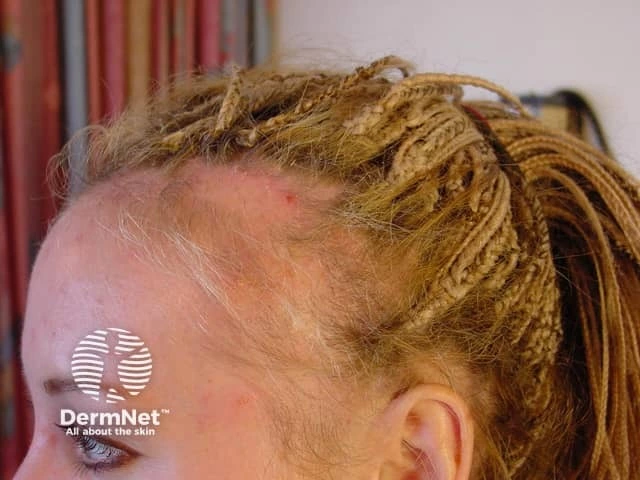
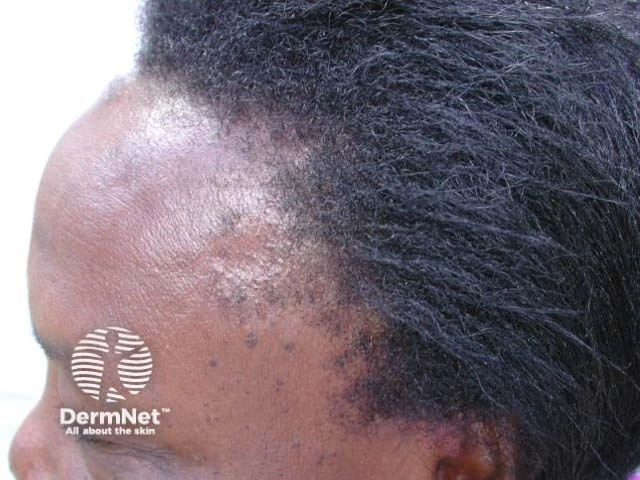
The key early sign of traction alopecia is thinning hair along your hairline. Some people may notice bumps that look like pimples in the areas with the most hair tension. These are signs of folliculitis (inflammation of hair follicles). You may also notice that your scalp feels tender, stings, or itches in affected areas under a lot of tension.
Over time, the hair loss along your hairline will increase. Many times, there are just a few fine, short hairs left in that area, and your hairline actually moves farther back. Health experts call this the fringe sign.
By the time you see these types of symptoms, you’ve likely experienced some permanent damage to the hair follicles along your hairline. These can scar, which means that regrowing hair becomes very difficult. This is why it’s important to see a dermatologist as soon as you realize you’re losing hair along your hairline. That way, you can treat traction alopecia before it becomes a long-term problem.
If you catch traction alopecia in the early stages and change your hair and/or headgear quickly, you may see hair regrowth within several months. It’s not guaranteed, but treating it early gives you the best chance of having your hair grow back.
The best thing you can do to help traction alopecia is to change how you’re styling your hair. If you regularly wear tight hairstyles, loosening them even a little bit — especially around the hairline — can help. If you use products or heat that’s damaging your hair, changing to safer, gentler products or using heat protection can help as well.
It can be difficult to make these changes if you wear your hair a certain way for work or religious beliefs. In these cases, you might need to work with your supervisors or religious leaders to make adjustments that won’t harm your hair or scalp. You can try wearing your hairstyle or gear as loosely as you can and let your hair down or remove it, whenever that’s possible.
Here are some adjustments you can make to better protect your hair:
If your scalp is significantly irritated, if changing your hairstyle isn’t helping, if you’re unable to change your hairstyle, or if you want to regrow your hair, your doctor may recommend one or more of the following treatments:
If your hair isn’t growing back or your doctor sees scarring on your scalp, they may send you to a specialist. The specialist will evaluate your scalp and your needs, then likely talk to you about a hair transplant. There are several methods for transplanting hair, and the specialist will help you choose the one that’s best for your hair and your scalp. Most of the time, your scarring will need to be stable for this to be an option.
Once hair regrows, it can still be damaged if you go back to your old hairstyles or headgear. Following the same suggestions outlined above can help protect your hair after it grows back.
If you spend any time wearing tight hairstyles or headgear, it’s important to check on your scalp every month or so. Look for places around your hairline where your hair is thinner or where you only have fine, thin hair. These may only show up in thin or bald patches where your hair is pulled the most tightly. You may also want to use shampoos and conditioners that are gentle on your scalp to avoid any additional inflammation.
Some signs indicate hair loss may be imminent:
If any of these happen, you need to loosen your hair or headgear soon and protect your hair from further damage.
On MyAlopeciaTeam, people share their experiences with alopecia, get advice, and find support from others who understand.
What treatment for traction alopecia worked for you? Let others know in the comments below.
Get updates directly to your inbox.


 Continue with Facebook
Continue with Email
Continue with Facebook
Continue with Email
Continue with Facebook
Continue with Email
Continue with Facebook
Continue with Email
Become a member to get even more





 Join
Join

 Your Privacy Choices

This is a member-feature!
Sign up for free to view article comments.
I loved this article because now I understand what happened with my hair and different ways I can give myself the best chance of regrowth.
We'd love to hear from you! Please share your name and email to post and read comments.
You'll also get the latest articles directly to your inbox.