
Powered By



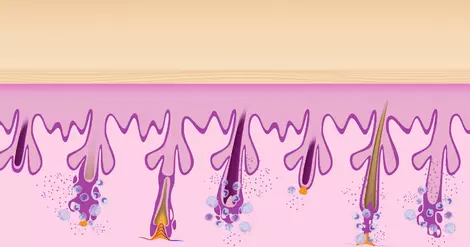
Not all hair loss is the same, and different people may have different types of alopecia. One type of hair loss is called scarring alopecia, which causes the hair follicle to be completely destroyed and replaced by scar tissue. Scarring alopecia, also known as cicatricial alopecia, causes permanent hair loss.
Unlike many other types of alopecia, scarring alopecia can’t be reversed. But catching it early can help you find treatment to manage your symptoms and, hopefully, keep the hair you still have.
Scarring alopecia is actually a group of rare hair loss disorders. There are two main types of scarring alopecia: primary and secondary.
Primary scarring alopecia starts within the body. It happens when the immune system mistakenly attacks the hair follicles. This damage is considered an autoimmune response. In autoimmune diseases, the immune system doesn’t work as it should and attacks the body itself (in this case, the hair follicles) instead of targeting outside threats, such as viruses.
Some people are more likely to develop autoimmune disorders than others. Risk is partly based on family history and genetics. Stress and other factors can also trigger it.
There’s more than one kind of primary scarring alopecia. Subtypes include:
Secondary scarring alopecia happens when an outside factor, rather than the body’s immune system, destroys the hair follicles. Infections, burns, or other injuries can damage the hair follicle permanently. Once the skin scars over, these follicles can’t recover and the lost hair can’t grow back.
Radiation treatments for cancer can also lead to secondary scarring alopecia. This happens if radiation burns the skin. Keep in mind that this is not the same as temporary hair loss from chemotherapy.
Patterns of hair loss and other alopecia symptoms can vary from person to person. Once a dermatologist identifies your specific type of alopecia, they can tell you what to expect.
The most common symptom of scarring alopecia involves bald patches that don’t regrow hair. Hair loss may happen all of a sudden or take years to progress. Hairless patches are usually replaced by smooth, shiny skin that doesn’t have any hair follicles.
Some people with scarring alopecia also have skin symptoms. Affected skin may become scaly or itchy. You may feel burning and sensitivity. In more severe cases, blisters can develop.
Unlike nonscarring alopecia, which causes temporary hair loss, scarring alopecia is much less common.
Hair loss changes how you look. It can also change how you see yourself. It’s common to feel discouraged after learning that lost hair won’t grow back. This news can be hard to accept, especially if you don’t know anyone else with the condition.
Patches of baldness on the scalp and hair loss in other areas (like lost eyelashes or eyebrows) can affect your self-esteem. You may worry that others will think you have a contagious disease or serious health problem. However, scarring alopecia isn’t something you can spread to another person. Letting others know about your condition can help you feel less isolated. You can also seek support from a therapist or community group.
Getting diagnosed with scarring alopecia starts with a physical exam and a discussion about your medical history. A dermatologist will look closely at your hair and skin, sometimes using dermoscopy (a special magnifying tool). They’ll check your hair follicles and screen for signs of inflammation. They’ll also run some blood tests to rule out other diseases that can cause hair loss. Be sure to share as many relevant details as you can, such as when your symptoms started and what type of hair products you use.
A scalp biopsy may be a helpful next step to confirm your diagnosis. During a biopsy, a small sample of skin is removed and viewed under a microscope. A biopsy can show if there are immune cells or scar tissue present. Your healthcare provider can use your biopsy results to get a better idea of the stage of alopecia (how far it’s progressed) and the specific subtype.
Primary scarring alopecia is caused by inflammation, so medical treatment focuses on reducing inflammation. Anti-inflammatory medications, like corticosteroids, can help calm the immune system. These may include pills (such as hydroxychloroquine), steroid injections, or creams. Some people with scarring alopecia may be prescribed biologics, which are long-term treatments to keep the immune system from attacking the body.
If the hair follicle is already destroyed, treatment can’t reverse existing hair loss, and hair regrowth will not be possible. However, treatment can help prevent further hair loss from happening. Follicles that are inflamed but not yet scarred may still be saved to avoid further hair loss.
Treatment plans for secondary scarring alopecia depend on the underlying cause. For example, if you have hair loss from a bacterial infection, you’ll likely need antibiotics.
Using care when styling your hair is also important to preserve it. Certain hairstyles and chemicals may promote scarring alopecia, so it’s best to have gentle hair care habits.
Some people with scarring alopecia wonder if they should get a hair transplant. Hair transplants take hair from one area and move it to areas without hair. This hair restoration procedure isn’t always successful in people with scarring alopecia. This is because scarred skin may not respond well to the transplant. Your healthcare provider will decide based on your situation. If your alopecia has been stable for a few years, you’re more likely to be a good candidate for the procedure.
The sooner scarring alopecia is diagnosed and treated, the better. It’s important to find a dermatologist who has experience treating people with hair loss.
You can also do your part by being prepared for your appointments. Take photos of your hair and make notes of your symptoms. Ask your relatives whether hair loss runs in the family. If your hair loss is spreading fast or you have pain or other signs of infection, seek care right away.
Ultimately, scarring alopecia needs long-term management. You’ll want to find a dermatologist who is helpful and understanding of its physical and emotional impact.
On MyAlopeciaTeam, people share their experiences with alopecia areata, get advice, and find support from others who understand.
Was your hair growth affected by scarring alopecia? Let others know in the comments below.
Get updates directly to your inbox.




 Continue with Facebook
Continue with Email
Continue with Facebook
Continue with Email
Continue with Facebook
Continue with Email
Continue with Facebook
Continue with Email
Become a member to get even more





 Join
Join

 Your Privacy Choices

This is a member-feature!
Sign up for free to view article comments.
was diagnosed with scarring alopecia, had biopsy, my dermatologist suggested a wig. My head sweats regularly, can't image a wig.
We'd love to hear from you! Please share your name and email to post and read comments.
You'll also get the latest articles directly to your inbox.