
Powered By



If you’ve noticed bald patches developing on your scalp, thinning in your beard, or unexpected hair loss elsewhere on your body, it may be alopecia areata. This is an autoimmune disorder that causes the immune system to attack your hair follicles. For men, hair loss can feel concerning, especially when it doesn’t follow the typical pattern of male-pattern baldness. You may be wondering what’s causing your hair loss and whether certain factors increase your risk of developing this condition.
Alopecia areata can affect people of any gender, and about 2 percent of people worldwide will develop it at some point. Although alopecia areata affects many people, researchers are still investigating its causes and risk factors.
Alopecia areata results in sudden hair loss. It’s the second most common form of hair loss in men after androgenetic alopecia (male-pattern baldness), per MedlinePlus.
Alopecia areata can affect people of any race or gender. According to the International Society of Hair Restoration Surgery, men and women were once thought to have an equal chance of developing alopecia areata. Recent findings suggest, however, that men may have a 30 percent lower chance than women.
Additionally, research from the National Alopecia Areata Foundation shows that Asian, Black, and Hispanic people may be more likely to develop alopecia areata compared to white people.
There are a few different types of alopecia areata, all of which can affect men. Alopecia areata can appear in several ways. Each type causes a different pattern of hair loss. The most common form is patchy alopecia areata. With this type, you may notice one or more coin-sized patches of hair loss that are usually round or oval.
Other types of alopecia areata include:
Alopecia areata can cause hair loss anywhere on your body, including your eyebrows and eyelashes. The most commonly affected area is the scalp. Hair loss in the beard is also called alopecia barbae. It’s the second most common area and, according to the National Alopecia Areata Foundation, affects 28 percent of men who have the condition. You may have body hair loss in only one area or in multiple areas of your body at the same time.
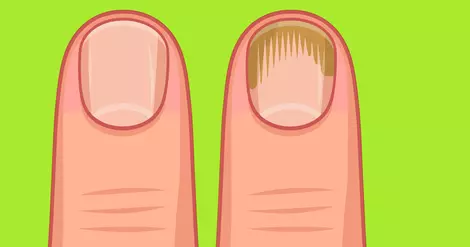
Alopecia areata can also affect your fingernails and toenails. For example, you may notice pits or ridges developing on your nails. A study from the Journal of Drugs in Dermatology found that these symptoms were more common in women than men. Changes to your nails may be associated with a higher chance of developing severe alopecia areata.
Symptoms of alopecia areata can develop at any age, but they are more common in younger people. Around 40 percent of people with alopecia areata will develop symptoms by the age of 20. By the age of 40, that percentage jumps to more than 80 percent.
One global study from the journal Biology of Sex Differences found differences in the ages at which men and women are at the highest risk of alopecia areata. For men, the highest risk is between ages 20 and 29 for people in developed countries and between ages 30 and 39 for people in less developed countries. The risk drops faster in men than in women as they age.
According to a study in the Journal of Drugs in Dermatology, boys ages 10 and younger were more likely than girls the same age to be diagnosed with alopecia areata.
A research study from Annals of Dermatology looked at cases in South Korea. It found that men were more likely to have severe alopecia areata. Studies of children have shown mixed results. One study showed that boys were more likely to develop severe alopecia areata, but another showed girls were more likely. More research is needed to understand who is at higher risk of more severe cases.
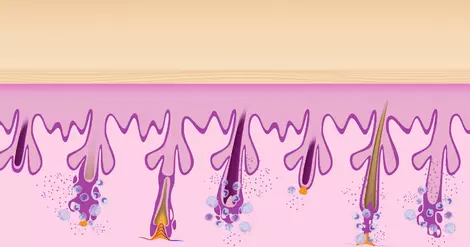
Researchers know that alopecia areata causes your immune system to attack hair follicles, which causes hair loss. It’s not clear exactly why your body does this. The condition is likely complex, involving both genetic and environmental factors. Additionally, researchers are studying whether certain lifestyle factors may increase your risk of developing alopecia areata.
Because of these uncertainties, there isn’t a lot of research that discusses how these factors influence men versus women. Here’s what we know about the causes, risk factors, and how they relate to gender.
Your genes may affect whether you develop alopecia areata. Researchers have found genes linked to hair, skin, and the immune system that may play a role in causing alopecia areata, although other factors are likely involved.
You may inherit genes that raise your risk of developing alopecia areata. Your risk is also higher if a close family member, such as a parent or sibling, has the condition.
According to a study from the Journal of Drugs in Dermatology, men are more likely than women to have a family history of alopecia areata.
The genes associated with alopecia areata are also linked to other autoimmune diseases. If you have any of the following, you have a higher risk of developing alopecia areata:
Psoriasis and vitiligo occur equally in men and women, but Johns Hopkins Medicine found that women are much more likely to develop lupus erythematosus and thyroid disease.
Research also shows that having asthma, allergic rhinitis (hay fever), or atopic dermatitis (eczema) is associated with a higher chance of developing alopecia areata. According to a review from the Current Allergy and Asthma Reports, some of these conditions are more common in boys during childhood, while others are more common in women later in life.
Several lifestyle factors may affect the development and progression of alopecia areata. Researchers are still learning how strongly these factors are connected to the condition.
If you smoke cigarettes, you may have a higher risk of developing alopecia areata. This risk increases if you’ve smoked for 10 years or longer and smoke at least five cigarettes per day. It’s not clear why smoking increases the risk of alopecia areata, but researchers think inflammation from cigarette smoke may play a role.
Our World in Data, a research website that shares global data, reports that more than 30 percent of men worldwide smoke tobacco, compared to less than 10 percent of women. In nearly every country, a higher percentage of men smoke than women.
The World Obesity Federation reports that adult obesity rates in men have quadrupled since 1975, reaching an estimated 14 percent in 2022. Having a higher body weight may be linked to alopecia areata. Researchers have shown that obesity can make inflammatory diseases, such as alopecia areata, worse. Studies in Israel and Japan have shown that alopecia areata is associated with higher body weight. However, researchers still don’t fully understand how body weight influences alopecia areata.
A few studies suggest that sleep disorders may raise the risk of alopecia areata. A review in the International Journal of Molecular Sciences also found an association between sleep disorders and a higher risk of alopecia areata.
Obstructive sleep apnea (OSA) is a sleep-related breathing disorder that partially or fully blocks the upper airways. The Journal of Thoracic Disease found that OSA is more common and can be more severe in men than in women.
Non-apnea insomnia is when someone has trouble falling asleep, staying asleep, or getting restful sleep. According to the Journal of Sleep Research, insomnia is more common in women than in men.
One study cited in a review in the International Journal of Molecular Sciences found that, among people with sleep disorders, those younger than 45 had a higher risk of alopecia areata than those 45 and older.
A third study found no link between sleep quality and alopecia areata. More research is needed to understand how sleep may affect the condition.
Environmental factors such as physical or emotional stress and certain viral infections may trigger alopecia areata. However, alopecia areata often begins with no clear cause.
Alopecia areata can affect men in different ways, from small bald patches to more widespread hair loss. Although researchers are still learning what causes it, factors like genetics, other health conditions, smoking, obesity, and sleep problems may play a role. If you notice sudden or unusual hair loss, a dermatologist can help find the cause and recommend the right treatment.
On MyAlopeciaTeam, people share their experiences with alopecia, get advice, and find support from others who understand.
What risk factors for developing alopecia areata are you most concerned about? Let others know in the comments below.
Get updates directly to your inbox.



 Continue with Facebook
Continue with Email
Continue with Facebook
Continue with Email
Continue with Facebook
Continue with Email
Continue with Facebook
Continue with Email
Become a member to get even more





 Join
Join

 Your Privacy Choices

This is a member-feature!
Sign up for free to view article comments.
We'd love to hear from you! Please share your name and email to post and read comments.
You'll also get the latest articles directly to your inbox.