
Powered By



Most people with alopecia areata lose scalp hair in clumps or patches, but about 10 percent lose hair across the entire scalp. This rare condition is called alopecia totalis. Alopecia totalis is a progression of alopecia areata and can develop after years of patchy hair loss. Find out what causes alopecia totalis, how it’s diagnosed, and what realistic treatment and coping options look like for complete scalp hair loss.
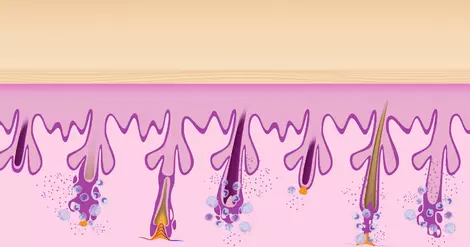
Alopecia totalis is an autoimmune condition. The immune system mistakenly attacks hair follicles because it thinks they’re foreign to the body. This causes inflammation that disrupts the hair growth cycle.
Alopecia totalis isn’t contagious or caused by poor hygiene. Some people are born with genes that increase their risk of alopecia totalis, while others may develop it after experiencing severe stress, like battling a virus. Having other autoimmune disorders — especially autoimmune thyroid disease, type 1 diabetes mellitus, inflammatory bowel disease, and vitiligo — seems to increase the risk of alopecia totalis. Researchers say that alopecia totalis may also occur spontaneously.
A healthcare provider typically diagnoses alopecia totalis through a physical exam and your medical history. Typically, complete scalp hair loss happens gradually, one to four years after patchy hair loss.
To confirm a diagnosis of alopecia totalis, your doctor will make sure you haven’t lost your eyelashes, eyebrow hair, armpit hair, or other body hair, as this could be a more severe type of alopecia called alopecia universalis. They’ll inspect your scalp to see if follicle orifices (the holes where hair emerges from the skin) are still present and that your skin doesn’t look too scaly or inflamed.
If hair has started to grow back, your healthcare provider may check for white hair or hair that’s thinner at the bottom and wider at the top. Pitted or indented nails can also point to alopecia totalis. In some cases, skin biopsies and blood tests can help rule out other issues.
The underlying cause of alopecia totalis — autoimmune dysfunction — can’t be cured. However, some amount of hair can grow back in roughly 77 percent of people with alopecia totalis. You’ll likely experience multiple episodes of hair loss over your lifetime, as only about 8.5 percent of people experience long-term regrowth.
That said, medications and procedures can help stimulate regrowth and prevent or minimize additional hair loss. Keep in mind: No treatment can guarantee regrowth, and results may vary from individual to individual.
A class of medications called Janus kinase (JAK) inhibitors is recommended for severe alopecia, including alopecia totalis. Janus kinases are part of the immune system’s communication network. When these messengers are blocked, hair follicles are less likely to be attacked.
JAK inhibitors are available as topical creams and oral pills. You may need to take these medications long term to prevent an alopecia totalis recurrence.
Corticosteroids reduce the inflammation associated with an autoimmune attack, helping the hair resume its normal growth cycle. Corticosteroids can be rubbed into the scalp, injected into the muscles or scalp, or taken orally.
Your healthcare provider may recommend taking “pulsed” corticosteroids. This means that instead of taking a low dose of steroids each day for a long period of time, you’ll take a high dose every day for a few days. Then, you’ll slowly taper off the medication. This strategy minimizes the side effects of corticosteroids while providing the usual benefits.
Minoxidil is a hair regrowth medication that’s available over the counter in low-dose, topical formulations. However, topical minoxidil may not be powerful enough to treat alopecia totalis. Instead, your healthcare provider may recommend oral minoxidil for effective treatment. Combining minoxidil with corticosteroids or JAK inhibitors may boost your hair growth.
Intentionally triggering an allergic reaction on your scalp can stimulate hair growth. Experts aren’t quite sure why this works, but it may “distract” the immune system from targeting hair follicles. The reaction is called contact dermatitis, and it temporarily causes dry, itchy, and irritated skin. Topical immunotherapy produces longer-lasting results than some other treatments for alopecia totalis.
If you don’t respond to first-line treatments for alopecia totalis, your healthcare provider may recommend short-term immunosuppressants. Like corticosteroids, immunosuppressants calm the immune system’s overreaction, allowing hair growth to begin again.
Exposure to ultraviolet (UV) light may also stimulate hair regrowth, but not everyone responds well to it. Taking a medication called psoralen before a phototherapy session helps your body absorb more UV light. It can be applied directly to the skin or taken as a pill.
During platelet-rich plasma therapy, your own blood is injected into the scalp to promote hair growth. Beforehand, your blood sample is separated into small particles, called platelets, from the rest of your blood. Platelets contain growth factors that help repair and regrow tissues. When platelets are injected near hair follicles, they can help stimulate regrowth.
Hair can be intricately tied to identity, and it can be distressing to not only lose it but also struggle to grow it back. Some people don’t mind embracing their new look, but it’s completely normal to want to restore your appearance before losing your hair.
If your hair won’t respond to treatments or is slow to grow, talk to your healthcare provider about cosmetic options or other ways to feel more confident.
Wigs can provide full scalp coverage in a variety of colors and styles. If you’ve been able to grow back some of your hair, consider a smaller hairpiece that covers only part of the scalp. Wigs and hairpieces can be made from real human hair for a natural look or from synthetic fibers to keep costs low. They’re typically mass-produced and commercially available.
Whereas wigs are typically removed each night and reset each morning, a custom hair prosthesis can be worn for weeks at a time. It’s essentially a wig made to fit the unique shape of your head for maximum comfort. It’s glued into place and can be washed in the shower like your natural hair. People often get a hair prosthesis that matches their natural hair color and texture, making it the next best thing to true hair regrowth.
You may also consider wearing headscarves, hats, or even wigs sewn into hats. This allows you to experiment with your look, protect your scalp, and switch up your style each day depending on your mood.
When you have alopecia of any kind, it’s important to work with a dermatologist you can trust. Being familiar with the different alopecia treatments is just the start. The doctor should also seek to understand your treatment goals and how alopecia affects more than just your scalp. A good alopecia dermatologist won’t hesitate to partner with other medical professionals to support your immune system and mental health.
Alopecia totalis doesn’t have to define how you look or feel. Many people can regrow their hair through topical creams, oral pills, temporary procedures, or a combination of treatments. However, because alopecia totalis is an autoimmune disease, it’s possible to experience flare-ups where your hair falls out again. Some people find that their hair simply won’t grow back. Adopting a diverse, long-term, and flexible treatment strategy can help you look and feel your best even during flare-ups or treatment-resistant hair loss.
On MyAlopeciaTeam, people share their experiences with alopecia, get advice, and find support from others who understand.
What treatments have been successful in your hair regrowth journey? Let others know in the comments below.
Get updates directly to your inbox.




 Continue with Facebook
Continue with Email
Continue with Facebook
Continue with Email
Continue with Facebook
Continue with Email
Continue with Facebook
Continue with Email
Become a member to get even more





 Join
Join

 Your Privacy Choices

This is a member-feature!
Sign up for free to view article comments.
Eyebrows is it totalis
We'd love to hear from you! Please share your name and email to post and read comments.
You'll also get the latest articles directly to your inbox.